




The Impact of Technology on Healthcare & Medical Jobs in SG
Singapore is the hotspot of healthcare and technology in Asia — an intersection of medical innovation and medical quality. The last few years have seen a monumental shift in the way we deliver and receive care. From Artificial Intelligence (AI) assisted diagnostics to virtual consultations, the Healthcare & Medical Jobs in SG world is changing quickly.
Key Takeaways
- Singapore leads in digital healthcare. As part of its Smart Nation vision, Singapore is employing the use of AI, telemedicine, robotics, and smart wards to improve efficiency, accuracy, and patient care.
- Healthcare roles are evolving. Health professionals are now expected to work with digital tools like AI diagnostics, electronic health records, and wearables.
- The demand for new tech-driven personnel such as AI specialists, tele-health coordinators, and cybersecurity professionals, is steadily increasing.
- Upskilling is essential to staying relevant and meeting hospital standards in the field of technology. Continuous learning, enrolling in digital courses, and learning from peers are all part and parcel of building a future-ready healthcare career.
This blog will explore technology’s role in shaping Singapore’s healthcare system and what it means for professionals, the exciting new roles on the horizon, and how you can be future-ready in this shifting landscape with insights from Nucleus Health.
The Role of Technology in Singapore’s Healthcare System
Singapore’s vision of becoming a “Smart Nation” is crystal clear in its healthcare advancements. Technology is not just an add-on anymore — it’s becoming the backbone of healthcare delivery.
Telemedicine platforms like Doctor Anywhere and WhiteCoat have redefined convenience, especially during the Covid-19 pandemic where people were more wary of going out. Patients can now consult doctors online, get prescriptions, and even have medicine delivered without stepping out of their homes.
Artificial Intelligence (AI) is helping doctors diagnose conditions earlier and more accurately. The National University Health System (NUHS), for instance, uses AI to detect early signs of chronic illnesses and cancers.
Robotic-assisted surgeries are increasingly common. At Ng Teng Fong General Hospital (NTFGH), robotic systems allow for highly precise, minimally invasive operations.
Down at Tan Tock Seng Hospital (TTSH), staff members make use of “Smart Wards” that are powered by gadgets and automated equipment. These wards automate patient monitoring, provide real-time patient vitals to staff and even automate manual tasks such as turning a bed-bound patient.
In an environment where seconds matter, Smart Wards enable healthcare staff to respond quickly to emergencies and patient needs, all while relieving them of manual processes.
All these developments are making healthcare more efficient, accessible, and patient-focused with redefining what Healthcare & Medical Jobs in SG look like today.
How Technology is Transforming Healthcare & Medical Jobs in SG
As technology becomes increasingly entrenched within the healthcare ecosystem, roles are evolving, and sometimes being re-engineered altogether.
For example, physicians and nurses are expected to be working with electronic health records, AI tools, and virtual care applications. New job roles, such as tele-health coordinators, digital health officers, and health informatics specialists, are now essential to day-to-day operations. Nurses and allied health professionals must employ tablets, automated monitoring, and wearable technology for patient care.
Upskilling is no longer a choice. Instead, upskilling is increasingly the key to remaining relevant within the dynamic field of healthcare and medical jobs in Singapore, a shift that Nucleus Health supports with resources and information.
Emerging Job Opportunities in the Digital Healthcare Space
Technology opens the doors to new occupations related to healthcare. Some exciting roles include:
- AI Specialists in Diagnostics: AI specialists collaborate with healthcare professionals to develop algorithms that support early disease detection, improve diagnostic accuracy, and streamline workflows.
- Data Analysts & Health Informatics Experts: The experts collect and manage healthcare data, transform it into actionable insights for better patient care and hospital efficiency, and ensure secure, ethical use of information systems.
- Tele-health & Remote Care Coordinators: Tele-health coordinators manage virtual consultations and follow-ups. They also help train both patients and staff on using tele-health platforms.
- Healthcare App Developers: Their work includes designing user-friendly apps for booking appointments, accessing records, or following treatment plans.
- Cybersecurity Professionals: These professionals work to develop and execute cybersecurity policies, all while maintaining the overall healthcare cybersecurity in the institution, making sure patient information stays private and secure.
These roles show that Healthcare & Medical Jobs in SG are no longer limited to traditional clinical settings — they now sit at the exciting intersection of medicine and technology.
Benefits and Challenges of Tech Integration
Like any big change, technology in healthcare comes with both rewards and roadblocks. Here’s a closer look:
Benefits
- Better Patient Care
- AI and remote monitoring enable faster diagnoses and better care.
- Tele-health makes healthcare accessible for those who can’t visit hospitals easily.
- Increased Efficiency
- Digital systems cut down paperwork.
- Real-time monitoring help detect emergencies early.
- Broader Career Options
- Opens doors to roles in tech, analytics, and app development.
- Supports career pivots and interdisciplinary growth.
- More Flexible Work
- Remote work is now a possibility for some healthcare roles.
- Repetitive or time-consuming work can be handled by AI, allowing professionals to focus on higher-level tasks and direct patient care.
Challenges
- Tech Resistance
- Older or less tech-savvy staff may struggle with new systems.
- Change management and training are needed.
- Privacy Concerns
- With more data stored online, cybersecurity becomes critical.
- Hospitals require strict cyber security protocols to ensure overall patient safety.
- Need for Constant Upskilling
- Learning new tools is now part of the job.
- Managing this alongside busy work days can be tough.
As Singapore pushes toward a smarter future, addressing these challenges are vital for one to be able to adapt and work in Healthcare & Medical Jobs in SG.
Upskilling for the Future: What Healthcare Professionals Need to Know
Want to stay ahead of the curve? Here’s how you can make yourself future-ready:
- Keep Learning
- Enrol in short courses on AI, telehealth, or medical data analysis.
- Use credits to subsidise professional development.
- Leverage Local Resources
- Join workshops hosted by the Singapore Medical Association or Nursing Board on digital healthcare topics.
- Network with others navigating similar changes.
- Get Certified
- Consider certifications in digital health, informatics, or health data privacy.
- Stay Curious
- Embrace tech with an open mind.
- Test new tools and explore platforms that can make your job easier.
- For New Grads & Students
- Consider dual specialisations or elective modules in healthcare and IT.
- Gain internship experience with tech-forward hospitals or startups.
In the future of Healthcare & Medical Jobs in SG, those who possess clinical knowledge with digital skills will be in the highest demand.
Conclusion
Technology is empowering healthcare workers rather than replacing them. For professionals in Singapore, this digital transformation opens doors to exciting new career paths — from AI specialists to tele-health coordinators — while enhancing patient care and operational efficiency. Healthcare professionals who embrace and continually upgrade their tech skills will be well-prepared to thrive in the city’s rapidly evolving healthcare landscape.
FAQs
Q1. What are the most in-demand tech-related healthcare jobs in Singapore?
AI specialists, digital health analysts, and telemedicine coordinators are seeing growing demand.
Q2. How has telemedicine impacted healthcare jobs in SG?
It has created flexible roles like virtual care coordinators and improved care delivery in remote or high-traffic situations.
Q3. Do healthcare professionals in SG need IT skills now?
Yes. Most roles require comfort with digital systems, electronic records, and basic data privacy practices.
Q4. Is the Singapore government supporting tech in healthcare?
Definitely. Initiatives like HealthHub, smart hospitals, and SkillsFuture are all part of the national strategy to support digital healthcare growth.
Related post
Common Mistakes to Avoid When Applying for Medical Jobs in Singapore
Singapore is more than just a skyline or chilli crab; it is also home to one the world’s best healthcare systems! With immaculate and efficient hospitals and patient care and systems that set high expectations, certainly it is not surprising that the dream of many doctors around the world is to build a career in Singapore.
Key Takeaways
- Be familiarised with the different types of registration (Full, Conditional, Temporary) before applying.
- Personalised, high-quality CVs make a big difference — a one-size-fits-all application simply may not meet the specific needs of each employer.
- Soft skills and cultural fit matter. Foreign candidates should be open-minded about adapting to a multicultural environment like Singapore.
- At Nucleus Health, we are here to guide you through the application process and secure the right role with confidence.
However, building a career and getting into Singapore’s medical workforce goes beyond just possessing the right degree or a number of years of experience. Many able professionals encounter problems when applying to work in Singapore – Not because they are inadequate, but because they pay attention to all but minor details. At Nucleus Health Pte. Ltd., we specialize in helping medical professionals navigate these problems with confidence.
So, if you are interested in one of the many great medical jobs in Singapore, let us make sure you do not fall squarely in the category of applicants that apply for jobs without following the all-important details.
1. Skipping the Homework on SMC Requirements
Let’s start with the biggest hurdle, that is registration with the Singapore Medical Council (SMC). Without it, you can’t legally practice medicine in Singapore, no matter how qualified or experienced you are. And yet, a lot of applicants assume their overseas degrees will automatically get them in the door.
Spoiler alert! they won’t.
There are three main types of registration:
- Full registration (if you’ve got years of relevant experience and a degree from an approved school),
- Conditional registration (you’ll work under supervision),
- Temporary registration (for specific short-term roles).
If your medical school isn’t on SMC’s approved list or if you don’t meet their specific clinical experience criteria, your application might hit a wall before it even begins. So before applying for doctor jobs in Singapore, make sure you understand where you stand.
You could also take guidance from a recruitment agency, which will ensure that you know exactly what registration you’re eligible for.
2. Letting Your Documents Do You Dirty
We understand that tracking down old transcripts, looking for seals, and finding notarizations are not anyone’s idea of fun. But the reality is that your paperwork can make or break your application.
Too many brilliant doctors lose out because they submitted incomplete or sloppy documentation.
If your documents aren’t in English, make sure they’re professionally translated and certified. Check every detail. Think of your application file like your personal billboard—it should reflect your professionalism, not your procrastination. Check out our guide on how to write a good CV for medical job applications in Singapore here.
3. Sending Out the Same Old CV and Cover Letter Everywhere
This might be the most common mistake of all. You have a well-written CV and cover letter, so you send the same version to every hospital across Singapore. But here’s the thing: Singapore’s healthcare system is unique, and generic applications rarely cut it.
The hospitals here want to know that you’ve taken the time to understand what they’re looking for. Emphasize any experience working in multicultural settings, any ability to communicate in multiple languages, or any knowledge of local diseases or health systems.
Stand out in competitive medical jobs in Singapore by customising your CV, not just once, but for every opportunity.
4. Overlooking What Each Hospital Actually Wants
Not all hospitals are created equal. In Singapore, restructured public hospitals often prioritise generalists and high-volume experience, while private hospitals may prefer specialists with a focus on patient experience and niche procedures.
Yet many candidates apply with a one-size-fits-all mindset. You’ll improve your odds dramatically by doing a bit of homework, like checking things like hospital websites and reading their mission statements.
5. Forgetting That Communication Is Everything
Yes, your clinical competency is important. But in Singapore’s multi-cultural society, how you communicate is just as important as what you know.
Doctors in Singapore meet patients from every background, with varying languages, customs, and beliefs regarding health and illness. If you are not prepared to change your communication style and approach, you may find it difficult to establish trust, and even pass your probationary period.
So when preparing for doctor jobs in Singapore, make sure you work on your soft skills.
6. Treating the Interview Like Just Another Form
Let’s face it – medical interviews are tough. Many candidates treat medical interviews with the same importance as a routine checkpoint rather than a pivotal moment in their career.
In medical interviews in Singapore, candidates can expect questions related to ethical dilemmas, teamwork, and stress management in a fast-paced environment. Additionally, interviewers are likely going to expect that you are aware of the health challenges facing Singapore.
Arrive early, dress smartly, and look professional. Make sure to do your homework on “medical interview” preparation, and practice with a friend or mentor. Having the guidance of a good recruitment agency like Nucleus Health Pte. Ltd. can really help here.
7. Ghosting After the Interview or Ignoring Networking
One often-overlooked mistake? Thinking the job process ends when the interview does. It doesn’t.
A short, respectful follow-up email thanking the interviewer and expressing continued interest can go a long way. It shows professionalism, maturity, and perhaps a genuine desire for the role.
Equally important are building connections. Medical jobs in Singapore are often filled through word-of-mouth or referrals. Join professional groups, attend webinars, or connect with healthcare professionals on LinkedIn.
Even a casual chat with someone in the local community could lead to your next opportunity.
Frequently Asked Questions
1. What are the requirements to apply for doctor jobs in Singapore?
A medical degree from an SMC-recognised university is preferred, if not from a reputable university.
2. Can foreign doctors work in Singapore?
Yes, but they have to meet the SMC requirements. Usually, they work under conditional registration.
3. How long does SMC registration take?
Usually it takes 1-3 months depending on your documents and references.
4. Do I have to prove my English proficiency?
Only if your medical education or documents are not in English.
5.What is the average doctor’s salary in Singapore?
Indicative salary is SGD 4,500–6,500/month for junior doctors. Although specialists can earn substantially more.
Conclusion
Working in Singapore is a dream for many doctors, and rightly so. However, getting medical Jobs in Singapore, in this high quality healthcare system requires more than just an impressive CV – it requires foresight, knowledge and a bit of humility.
Avoiding the below popular pitfalls, from licensing to generic CVs, could make your journey far more manageable. At Nucleus Health Pte. Ltd., we understand these challenges firsthand and are committed to guiding healthcare professionals through this journey with clarity and confidence.
So take a deep breath, do your due diligence, and take your time through the process with purpose. After all, you are not just applying for a position. You are about to enter a new marque – potentially the most fulfilling one yet.
7 min read
How Can Foreigners Find Doctors Jobs in Singapore?
Can a foreigner work as a doctor in Singapore? The answer is absolutely yes! As long as you can fulfil the requirements and criteria to obtain the medical license and working visa, you can work as a doctor in Singapore. It might not be as complicated as what most people think. Therefore, to understand How foreigners can find doctors jobs in Singapore, let’s dive in!
Key Takeaways
- Foreigners can work as doctors in Singapore if they meet licensing and visa requirements.
- Studying locally at NUS, Duke-NUS, or NTU offers a clear path to employment.
- Foreign qualifications must be recognized by the Singapore Medical Council (SMC).
- Most foreign doctors start with Conditional Registration and progress to Full Registration.
- Specialists need accreditation from the Specialists Accreditation Board (SAB).
- A valid Employment Pass is required to work.
- Nucleus Health Singapore offers free support to candidates for job placement and paperwork.
Pursuing medical training in Singapore’s medical institutions
The most straightforward way of getting doctor jobs in Singapore is to study in the local medical institutions. There are currently 3 (three) world class medical schools in Singapore, namely National University Singapore (NUS) Yong Loo Lin Medical School, Duke-NUS Medical School (for postgraduate entry only) and Nanyang Technological University (NTU)-Lee Kong Chian School of Medicine.
MBBS (basic medical degree) generally takes 5 years of studies excluding housemanship / first year of residency. On the other hand, MMed (post graduate degree) will take 5 – 6 years. There is almost guarantee that upon completion of MBBS and/or Mmed, you would get a medical jobs or doctor jobs in Singapore, but mostly at the public hospital at the start.
Apply for doctor job with foreign medical qualifications
In order to get the answer of How foreigners can find doctors jobs in Singapore, first of all you need to apply and secure employment with the healthcare institutions that are approved by Singapore Medical Council (SMC). But before you apply with those healthcare institutions, you need to make sure that your medical qualification, either basic medical degree or postgraduate degree, is recognised by SMC. Otherwise, your application will not be considered at all since you are not eligible for medical registration in any way.
You need to note that there is no examinations required for medical registration with the SMC. The medical registration process is strightly based on the qualification that you had.
Before we proceed further, you might want to know that there are 4 (four) types of medical registration in Singapore that are issued by the Singapore Medical Council:
- Provisional Registration – This is only for MBBS doctors graduated from the Singapore medical schools listed above who wanted to be employed as Postgraduate Year 1 (PGY1) trainee / House Officer in approved hospitals in Singapore for a period of 12 months. This is the process prior to getting the Full Registration.
- Temporary Registration – This is granted to the overseas trained / foreign doctors who come to Singapore for the purpose of teaching, conducting lectures, research, postgraduate studies under SMC-approved programme. This registration is required only if the trained doctors or visiting experts are performing procedures and consultations to patients.
- Conditional Registration – This is the point of entry for most of the foreign doctors who wanted to work in Singapore. Foreign doctors, upon obtaining employment by SMC-approved medical institutions, can apply for Conditional Registration as the medical license to practice in Singapore. As the name shows, there are conditions attached to this type of registration. You can work only in a specific SMC-approved healthcare institution and under the supervision of a fully registered medical practitioner. This process usually takes 4 – 8 week.
- Full Registration –The holder of Provisional Registration and Conditional Registration can apply for Full Registration after fulfilling a set of stringent criteria. Having a Full Registration allow any doctors, both local of overseas trained doctors, to practice independently in Singapore.
Foreign Doctors who want to practice as a Specialist in Singapore
So far, what we have discussed is for non-specialist foreign doctor to find doctor’s job in Singapore. Let us explore more for the case of specialist foreign doctor who want to explore medical career and want to have a doctor’s job in Singapore.
The first step is to get job employment from SMC-approved healthcare institution and to apply for accreditation with the Specialists Accreditation Board (SAB) of Singapore. Your specialty must be listed in the Specialties Recognised in Singapore list. Your training and / or postgraduate qualifications must also be recognised by the SAB. Besides that, you need be a registered medical specialist in your country of origin.
The next step is to apply for Specialist Registration with the Singapore Medical Council (SMC). The documentations required for this step will be similar to that of Conditional Registration. You are expected to include at least 1 (one) registrable postgraduate qualification.
Both application are to be submitted concurrently upon receiving employment offer from SMC-approved medical institutions. The processing time for the application might take 3 – 4 months.
How to apply for Work Visa / Pass
Once you have accepted the job offer from a medical institution in Singapore and issued the Conditional Registration by the Singapore Medical Council, the next phase is for you to apply for a work visa or pass.
There are several types of work pass issued by the Singapore Ministry of Manpower, such as Employment Pass, Entre Pass, S Pass, Work Permit, Work Holiday Pass and many others. But the one that concern you for working as a doctor in Singapore is the Employment Pass. In order to obtain this pass, you are required to have a job offer, supported by the Singapore Medical Council and to earn at least SGD 4,500 per month. This is not an issue especially if you have received a job offer from any SMC-approved medical institutions in the first place.
A Final Thought
If you manage to follow us up to this stage, you might have realised foreigners can find doctors jobs in Singapore. The application process is clear and the details are all listed in the websites of the Singapore Medical Council, Singapore Accreditation Board and Singapore Ministry of Manpower.
However you might also realised the documentation and time required to comply with all of the requirement is quite significant. You might still be working long hours as a doctor in your home country besides your other commitments. This is where we can help you.
Nucleus Health Singapore is a registered and reputable healthcare recruitment agency in Singapore specialised in the doctor jobs. We work with various SMC-approved medical institutions to meet their hiring needs. Likewise, if your concern is How foreigners can find doctors jobs in Singapore then,We are always ready to help you to secure medical job in Singapore and assist you with the paperworks. We do not charge candidate any fees. Feel free to contact our consultants anytime to schedule a consultation session.
6 min read
The Guide to Writing CV for Medical Job Applications in Singapore
When you are preparing for medical job applications in Singapore, CV is the first document required. Prospective employers would use it to assess your skills and experience in a quick glance. You should use the CV effectively to showcase your skills, experiences and achievements that you had acquired throughout your career. You need to be relevant and clear in your CV so that the prospective employer can easily determine whether you meet the requirement for the job.
Key Takeaways
- A clear, well-structured CV that highlights relevant experience and skills will help you stand out from other candidates and increase your chances of securing an interview.
- Nucleus Health does not charge you any fees for assisting in your medical job applications in Singapore.
- Besides CV preparation, we will assist you with Medical Registration (License) and Employment Pass (Visa) application.
The Structure of CV
Based on my years of experience as recruitment consultant, I would suggest the following structure in preparing your CV.
- Personal details – include your full name with abbreviated qualifications, gender, date of birth, nationality, marriage status, where are you currently worked at, your language skills (briefly mention) and contact details.
- Medical qualification – list down your qualifications, from your basic (MBBS, MBBCh), post graduate (MRCP, FRCR 2A, FRCEM Intermediate) to the most recent qualification or degree, with the years when you obtained them. Dont forget to include your linguistic assessment examination (OET, IELTS) or other advanced qualification.
- Medical registration – list down all of licenses or registration that you had, together with the name of the medical council, country, registration number and the years of validity.
- Working experience – this is the key highlight of your CV. You need to provide a historical list of the jobs that you had after your internship / housemanship training. For every job details that you provide, remember to include:
- Your job position – for example, Medical Officer, Resident Physician or Consultant.
- The department, institution name, city and country – for example, Department of Emergency Medicine, All India Medical Center, New Delhi, India.
- The years of service – list out the starting date and ending date, or whether you are still working there. You might want to write in a clear format (DD-Month-YYYY or DD-MM-YYYY), such as 01 January 2020 – present.
- Brief description of the hospital – do take note that you might be applying for international job and the prospective employers might not fully aware of the details of the medical service in your country. Explain briefly some details in one bullet point – the size of the hospital / number of beds and whether it is a regional hospital.
- Clinical skills and experience performed – a description of the medical duties, procedures and treatment that you perform. This is the key highlight of your job. List down everything in details, such as assisted in the laparoscopic surgery, performed catheterisaton, intubation, ventilation and so on.
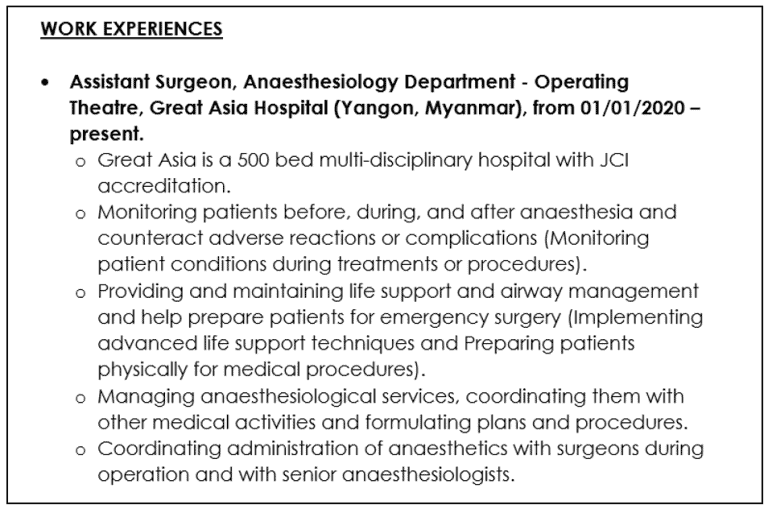
Image 1 – example of working experience section of the CV
- Other experience – this will be your experience beside medical practice. If you dont have such experience at the moment, it is okay to leave it blank.
- Management and leadership experience – list out your experience such as your roles in organising / steering committee, rota management or supervision of junior doctors.
- Research experience – list out your topic of research, time spent, location, supervisor and source of funding, aims and your role, and final outcome.
- Clinical audit experience – list out your topic of audit, month or year completed, location or institution, your role, and the guidelines audited against.
- Teaching experience – list out the audiences or the group of people you have taught, the teaching method, time span or duration.
- Internship / Housemanship experience – list down the details of the discipline, period of internship and the institutions or hospitals where you conduct your internship / housemanship.
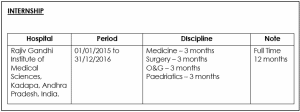
Image 2 – example of internship section of the CV
- Clinical Skills, Technique and Experience – this will be the section where you can list out your unique skills, technique and competencies that are related to the job or career you are pursuing. This is a summary of your skill set in keywords.
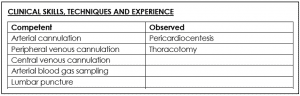
Image 3 – example of clinical skills section of the CV
- Development courses and conferences attended – list down the courses and conferences you have attended, including the title of the course, the course provider and location, the date or certification of validity of trainings.
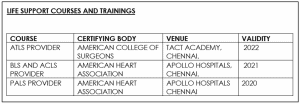
Image 4 – example of development courses section of the CV
- Presentations and publications – list the date presented or published, title or topic, date, and location or journal.
- Personal Skills
- Information technology – list down your familiarity or proficiency in IT such as Ms Office, statistical and research tools.
- Linguistic skill – list down the languages that your are able to converse or write with the level of proficiency for each of them.
- Personal interests
- Referees – List at least three or four referees from your current and previous posts with their full details (dont forget their contact number and email address) so that the prospective employers can easily reach out to them to verify your working experience under them.
GENERAL ADVICE
We have some practical advice for you to prepare your CV.
- Ensure that your CV has a clear structure, relevancy and clarity – this is to enable prospective employers to have a clear overview of you.
- Formatting – do not use different font types, sizes, colours that might distract readers. Avoid the use of expand / collapse heading which might risk any section not being read by the prospective employers. Ensure that your formatting, layout and structure remain consistent.
- Do not fabricate any information – any fabrication, misrepresentation and untrue information will cause you to be blacklisted by the hiring employer, termination from your job (if you have been appointed) or even blacklisted by the medical council. This will severely impact your career in the future.
- Provide relevant attachment – remember to resize the documents to reduce the file size with online tools. You might find difficulties sending extremely large sized attachment or it might even end up in the junk mail folder of the recipient.
WRAPPING UP
Having a perfectly written CV will not guarantee being shortlisted by prospective employers. However, it will be able to increase your odds of success and stand out among the other applicants.
Nucleus Health DO NOT charge you any fees for assisting in your medical job applications in Singapore. Besides CV preparation, we will assist you all the way to Medical Registration (License) and Employment Pass (Visa) application.
We hope that the tips provided will be helpful to guide you preparing a well structured CV.
6 min read